
Authorized dealer · Certified installers · Charlotte, NC headquarters
Authorized dealer and certified installers — North and South Carolina
360 Technology Group is an authorized dealer and certified installer for the manufacturers we represent, and has been installing structured cabling and certified network infrastructure across North and South Carolina since 2018 — more than 8 years.
- Authorized dealer — genuine equipment, licensing and manufacturer support entitlement.
- Certified installers — factory-trained technicians handle the cabling, mounting, power, programming and commissioning.
- Repair, service and takeover — we maintain, repair, upgrade and take over existing systems.
- 24/7 emergency service — on-call service technicians for emergency repairs, plus scheduled preventive maintenance.
We cover every city in North Carolina and South Carolina from our Charlotte headquarters. Request a quote or service call Call 704-726-4254
Structured cabling and low-voltage contractors — North & South Carolina
Structured cabling contractors in North Carolina and South Carolina
360 Technology Group is a commercial structured cabling and low-voltage contractor headquartered in Charlotte, North Carolina. We install, test, certify and document network cabling for offices, warehouses, schools, healthcare, manufacturing plants, data centers and multi-tenant buildings throughout both Carolinas — Charlotte, Raleigh, Greensboro, Winston-Salem, Wilmington and Asheville in North Carolina; Rock Hill, Fort Mill, Columbia, Greenville, Spartanburg, Charleston, Bluffton and Myrtle Beach in South Carolina.
Because we also install the security cameras, access control and AV that ride on that cabling, the infrastructure gets designed for what will actually be plugged into it. That is the difference between a data cabling contractor and a low-voltage contractor who has to make the system work afterwards.
Copper
Cat5e, Cat6 and Cat6A commercial data cabling, work-area outlets, patch panels, racks and cable management, plenum and riser rated where required, terminated, tested and labeled to a documented scheme.
Fiber
Single-mode and multimode backbone, building-to-building runs, fusion splicing, terminations, OTDR and insertion-loss testing, and the optics to match. More on fiber-optic cabling.
Wireless
WiFi access point cabling and placement based on a real coverage requirement, not a guess — density, roaming, interference and the actual client devices in the building.
Voice and data
Voice and data cabling, DEMARC extensions, equipment-room build-out, grounding and bonding, and clean-up of the closets that grew organically for a decade. More on voice and data.
Certification testing
Every link tested to standard with results delivered as a report, not a verbal assurance. That report is what you hand the next contractor, and what settles the argument when an application is slow.
Removal and abatement
Abandoned cable removal, which is a code obligation in many jurisdictions and a real fire-load issue in older Carolina buildings with thirty years of accumulated runs above the ceiling.
What a structured cabling quote should include — and usually does not
- A cable schedule. Every drop numbered, with origin, destination and outlet. If a quote says “80 drops” and nothing else, nobody can verify what was installed.
- Certification results. Test reports per link, delivered as a file. This is the deliverable that proves the work, and it is the first thing omitted on a cheap bid.
- Labeling at both ends. Matching labels at the outlet and the patch panel, matching the schedule and the as-built. Unlabeled cable costs money for the rest of the building’s life.
- Pathway and firestopping. J-hooks, tray, conduit, sleeves and rated firestop at every penetration. Cable laid on ceiling tiles or through an unsealed rated wall is a failed inspection waiting to happen.
- Rack elevation and closet layout. Where equipment goes, how it is powered, how it is cooled and how much space is left for growth.
- As-built documentation. Floor plans marked with outlet locations and cable IDs, handed over at completion.
New construction, renovation and occupied buildings
On new construction we coordinate with the general contractor and the electrical trade around rough-in, work off the drawings and hit inspection milestones. On renovations and occupied buildings — which is most of our work — the constraint is usually people, not cable: pathways above occupied ceilings, work restricted to nights and weekends, and cutover windows that cannot slip because the business opens at 8am. We phase the work and stage the cutover so the network is never down during business hours.
We also handle data center and hyperscale cabling, staging and logistics, IT equipment installation and removal, and DEMARC extensions. See all network services.
Questions we get asked before a quote
Do you work in both North and South Carolina?
Yes. Our office, warehouse and dispatch are in Charlotte, which sits on the state line corridor, so York and Lancaster county South Carolina sites are inside our routine daily area. We take projects statewide in both Carolinas.
Cat6 or Cat6A?
Cat6 is adequate for most office work today. Cat6A is worth the extra cost where you are running high-density WiFi access points, planning multi-gig to the desk, or installing cabling you do not intend to touch again for fifteen years. We will tell you which one your building actually needs rather than defaulting to the more expensive answer.
Will you certify the cabling?
Yes, and we deliver the test results as part of the closeout package along with the cable schedule and as-built drawings. If a bid you are comparing does not include certification, you are not comparing the same scope.
Can you take over a partially finished job?
Yes, though we will test what is already installed and tell you what has to be redone before we put our name on the certification. We will not certify someone else’s untested work.
Do you do the cameras and access control too?
Yes — that is most of what we do. Having one contractor for the cabling and for the systems that run on it removes the finger-pointing when something does not work at commissioning.
Can you remove old abandoned cable?
Yes. Abandoned cable removal and abatement is a normal part of our scope and is often required by code during renovations.
Get a fixed quote after a site walk
Send us the address, the building type and roughly what you need covered. We will schedule a site survey, confirm what the building already has, and give you a written scope and price — not a phone estimate.
Request a site survey Call 704-726-4254
Charlotte, NC headquarters · every city in North and South Carolina · office Monday–Friday 8–5 · 24/7 emergency service by on-call technicians.
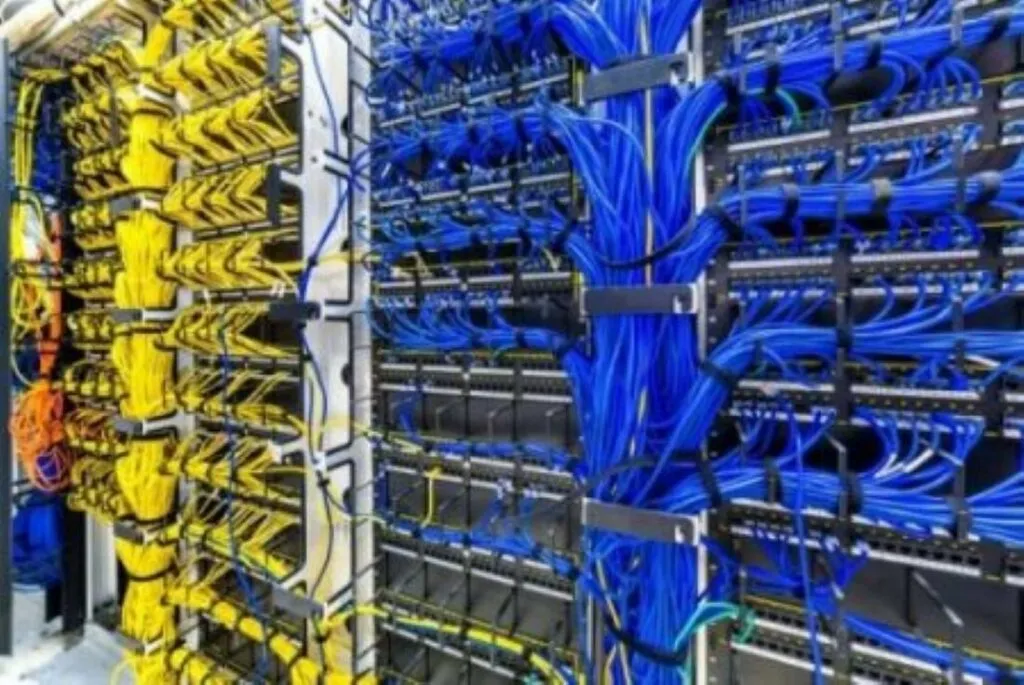
Capabilities and selection checkpoints
The cards in this section summarize information to evaluate; they are not separate pages. Availability and compatibility can change, so final models and releases must be confirmed against current manufacturer resources.
Structured Cabling for Commercial Facilities
Treat this as a design checkpoint; the final selection depends on field conditions and supported releases.
Capabilities and decisions
Review compatibility, capacity, infrastructure and lifecycle implications with the complete system design.
Low-voltage services
Connect this capability to a named user workflow and a testable result at the actual facility.
Fiber optics
Review compatibility, capacity, infrastructure and lifecycle implications with the complete system design.
Network services
Document who configures, tests, administers and supports this function after the project is accepted.
Commercial data cabling
Review compatibility, capacity, infrastructure and lifecycle implications with the complete system design.
Existing equipment, drawings, credentials and available configuration backups.
Review compatibility, capacity, infrastructure and lifecycle implications with the complete system design.
Required users, locations, workflows, integrations and expected growth.
Review compatibility, capacity, infrastructure and lifecycle implications with the complete system design.
Power, pathways, cabling, network and environmental constraints.
Review compatibility, capacity, infrastructure and lifecycle implications with the complete system design.
Safety, egress, privacy, retention and organizational policy requirements.
Document who configures, tests, administers and supports this function after the project is accepted.
Product support status, update path and compatible replacement options.
Compare retained equipment, migration effort, subscription impact and replacement options for this topic.
Commissioning tests, administrator training and final documentation.
Confirm which current models, editions, licenses and dependencies support this requirement before procurement.
Evidence to collect before design
A useful survey and stakeholder review should produce the following project evidence for Structured Cabling:
- Applications, device counts, bandwidth, PoE, latency, availability and growth expectations.
- Telecommunications rooms, rack space, pathways, distances, grounding, power and environmental conditions.
- Copper category, fiber type, strand count, connectors, optics, patching and labeling standards.
- Addressing, VLANs, identity, firewall policy, remote management, monitoring and cybersecurity requirements.
- Wireless coverage, capacity, roaming, interference and actual client-device characteristics where applicable.
- Certification tests, configuration records, diagrams, cable schedules and expansion documentation.
Architecture and integration review
Capacity model
Translate applications and device counts into ports, PoE, uplinks, spectrum and growth headroom.
Physical layer
Select copper, fiber, pathways, racks and environmental protection from field conditions.
Segmentation
Separate users, guests, cameras, access control, building devices and management traffic deliberately.
Resilience
Define acceptable outages, redundant paths, backup power, spares and recovery procedures.
Operations
Assign configuration backups, updates, monitoring, account control and change documentation.
Proof of performance
Use certification, throughput, coverage and failover tests tied to written acceptance criteria.
Compare proposals on the same evidence
Product names and device counts do not make competing proposals equivalent. Ask each bidder to identify assumptions, exclusions, supported versions, owner responsibilities and the proof that will be delivered at acceptance.
| Comparison area | Evidence a complete proposal should provide |
|---|---|
| Fit for the operating need | A written explanation of how Structured Cabling supports the required users, events and workflows. |
| Compatibility | A supported-parts, software, license and integration matrix tied to the proposed architecture. |
| Infrastructure | Documented power, network, pathways, environmental and owner-furnished dependencies. |
| Acceptance | Named tests, expected results, exception handling and responsibility for correcting deficiencies. |
| Lifecycle | Current support status, update approach, warranty, subscriptions, spares and replacement planning. |
Deployment and acceptance sequence
- Discovery: agree on users, operating outcomes, retained systems, constraints and acceptance criteria.
- Field validation: verify dimensions, infrastructure, environmental conditions, pathways, power, network and integration points.
- Documented design: name the architecture, supported components, licenses, responsibilities, assumptions and change process.
- Staging and implementation: prepare configuration, backups, labels and test scripts before controlled field deployment.
- Operational acceptance: exercise normal use, exceptions, outages and recovery; then deliver training and system records.
Software, firmware and lifecycle responsibility
Record the installed model, hardware revision, software or firmware release, license or subscription, warranty and administrator ownership at handoff. Those details make later troubleshooting and upgrade planning materially safer.
Downloads, release notes, advisories and manuals should come from the manufacturer’s official portal. 360 Technology Group links to official resources and does not host firmware files locally. Some portals require an authorized customer, dealer or support entitlement.
Before any update, confirm the exact model and region, prerequisites, supported intermediate releases, backup, maintenance window, integration compatibility, rollback limits and post-update test plan. Cloud-managed products may control release timing differently from locally managed systems.
Build a project-specific comparison
Share the facility type, Carolina location, existing platform, approximate device count, operating problem, required integrations and target schedule. 360 Technology Group can use that context to determine whether Structured Cabling deserves a detailed site and design review.
Commercial cabling scope and acceptance
Structured cabling that can be operated, tested and expanded
A cabling proposal is only useful when it explains what will be installed, how it will be identified, what will be tested and what the client receives at closeout. 360 Technology Group plans and installs copper and fiber infrastructure for offices, warehouses, healthcare properties, campuses, retail sites and multi-location programs across North and South Carolina. New construction, occupied renovations, additions and troubleshooting each require a different field plan.
Survey and design basis
Document equipment-room conditions, pathways, outlet locations, ceiling access, cable distances, device power, backbone requirements and active-network dependencies. The design should identify assumptions that must be verified before mobilization.
Installation and administration
Coordinate pathways, firestopping, support methods, bend radius, separation, rack placement, patching and labeling. Identifiers should agree at the outlet, patch panel, test report and as-built schedule so another technician can trace the circuit.
Testing and closeout
Define the applicable copper certification or fiber test method before work begins. Closeout can include test results, exception resolution, labeling records, rack elevations, pathway notes, photographs and a punch-list signoff.
What to settle before comparing cabling quotes
| Decision | Questions the scope should answer | Acceptance evidence |
|---|---|---|
| Copper horizontal cabling | Which performance category, outlet count, pathway, patching and device use are required? Are PoE loads and future capacity considered? | Identifiers, cable map, certification results and corrected exceptions. |
| Fiber backbone | Which endpoints, fiber type, strand count, connector format, route protection, growth allowance and active optics are involved? | End-to-end test record matched to strand and endpoint labels. |
| Telecom rooms and racks | Are rack space, grounding, power, cooling, patch-cord management and service clearances adequate for the planned equipment? | Rack elevation or port schedule, labeled patching and installation photographs. |
| Occupied-site work | Which areas are restricted, when can outages occur, what dust/noise controls apply and how will users be notified? | Approved work windows, restoration checks and documented handback. |
Carolina field conditions belong in the plan
Projects in Greenville, Charlotte, the Triangle, the Triad, Columbia, Charleston, Bluffton and surrounding markets can include very different building conditions. Coastal humidity and outdoor pathways, active warehouse traffic, above-ceiling congestion, historic construction and phased tenant occupancy all affect the installation method. A useful survey records those conditions instead of treating every site as the same bill of materials.
Related planning guides cover network services and fiber-optic infrastructure. For a budgetary or construction-ready scope, request a site review and share the floor plans, outlet schedule, existing rack information and target completion date if available.
Structured cabling cost, testing and contractor scope
Use this practical buyer guide to prepare scope, compare proposals and connect research with surveyed installation, commissioning, maintenance and repair in North and South Carolina.