
Commercial security and low-voltage installation across South Carolina
360 Technology Group covers South Carolina from our Charlotte headquarters, which sits directly on the state line corridor. Rock Hill, Fort Mill, Lake Wylie, Tega Cay and the rest of York and Lancaster counties are inside our routine daily service area, and we take projects and service contracts through the Midlands, Upstate and Lowcountry.
Dispatched from: 6201 Fairview Rd, Charlotte, North Carolina 28210.
Phone: 704-726-4254 · Email: Sales@360TechnologyGroup.com
Office hours: Monday–Friday, 8:00 am – 5:00 pm. Emergency service: 24/7 by on-call service technicians.
South Carolina cities we cover
We work throughout South Carolina. Frequently served SC markets include:
Rock Hill, Fort Mill, Columbia, Charleston, North Charleston, Greenville, Spartanburg, Myrtle Beach, Summerville, Mount Pleasant, Goose Creek, Sumter, Florence, Anderson, Greer, Aiken, Lancaster, Clover, Lake Wylie, Tega Cay, Bluffton and Hilton Head Island — and every other city and town in the state.
How work is scheduled and dispatched
- Office hours: Monday to Friday, 8:00 am – 5:00 pm. Clients are welcome to visit the Charlotte office during regular business hours.
- Emergency service: 24 hours a day, 7 days a week. Emergency repairs and after-hours service calls are handled by our on-call service technicians.
- Crews and trucks are dispatched from the Charlotte office to South Carolina job sites. Vehicles are stocked for access control, camera, intercom, gate and low-voltage work.
- Site survey first on unfamiliar buildings. We verify door and frame conditions, existing panels and readers, cable routes, power, network and fire-alarm interfaces before quoting.
- Service takeovers accepted. We repair, maintain and expand systems we did not originally install, including systems left behind by another contractor.
What we install and service
Access control
Commercial door access systems, card and key-fob entry, keypads, mobile credentials, electric strikes, magnetic locks, request-to-exit devices, door-position switches, panel replacement and cloud migration.
Security cameras
Commercial camera systems, NVR and cloud video, parking-lot and perimeter coverage, license plate cameras, video management software, retention planning and incident export.
Intercom and entry
IP video intercom, door stations, multi-tenant entry panels, package rooms, elevator and gate call routing, and visitor management.
Alarms and intrusion
Commercial burglar and intrusion alarm panels, sensors, communicators, monitoring hand-off and integration with access control and video.
Low voltage and cabling
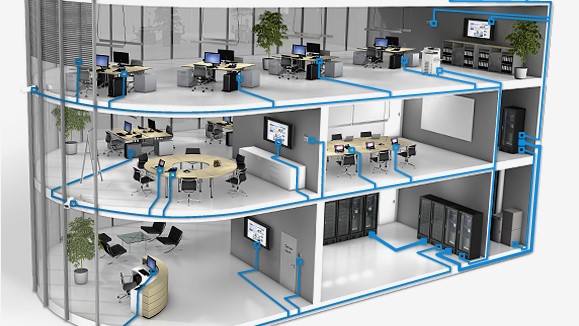
Structured cabling, fiber, voice and data, certified testing, cabling for cameras and readers, PoE switching and equipment-room build-out.
Gates and entrance systems
Slide, swing and barrier gate operators, telephone and video entry, loops and safety devices, turnstiles, speed gates and automatic doors.
Brands we are an authorized dealer and certified installer for
360 Technology Group is an authorized dealer and certified installer for every manufacturer listed on this site. We supply genuine equipment and licensing, install and commission it, and service it afterwards. Select a manufacturer to see the equipment we install, the software we configure and the service we provide.




















Detailed product and planning guides
Each card below opens a published guide with deeper product-family, design or implementation information.
Service Areas in North and South Carolina
Open the detailed product, design or implementation guide.
Charlotte Headquarters
Open the detailed product, design or implementation guide.
North Carolina Service Areas
Open the detailed product, design or implementation guide.
Capabilities and selection checkpoints
The cards in this section summarize information to evaluate; they are not separate pages. Availability and compatibility can change, so final models and releases must be confirmed against current manufacturer resources.
Headquarters and regional coordination
Connect this capability to a named user workflow and a testable result at the actual facility.
Rock Hill and Fort Mill
Connect this capability to a named user workflow and a testable result at the actual facility.
Lowcountry and Grand Strand
Confirm which current models, editions, licenses and dependencies support this requirement before procurement.
South Carolina planning considerations
Connect this capability to a named user workflow and a testable result at the actual facility.
Information that improves the first project review
Compare retained equipment, migration effort, subscription impact and replacement options for this topic.
Facility addresses and the number of sites
Document who configures, tests, administers and supports this function after the project is accepted.
System type, current platform and known model numbers
Connect this capability to a named user workflow and a testable result at the actual facility.
Approximate door, camera, intercom, alarm, cable or device counts
Document who configures, tests, administers and supports this function after the project is accepted.
Required integrations, retention, credentials and administrator workflows
Compare retained equipment, migration effort, subscription impact and replacement options for this topic.
Target schedule, active construction phases and occupied-space restrictions
Connect this capability to a named user workflow and a testable result at the actual facility.
IT, cybersecurity, network, power and remote-access requirements
Document who configures, tests, administers and supports this function after the project is accepted.
How service-area decisions are made
Review compatibility, capacity, infrastructure and lifecycle implications with the complete system design.
Evidence to collect before design
A useful survey and stakeholder review should produce the following project evidence for South Carolina Service Areas:
- Operating problem, affected users, existing equipment, site conditions and measurable acceptance criteria.
- Drawings, device counts, locations, schedules, standards and known project constraints.
- Power, cabling, pathways, network, cybersecurity and other-trade responsibilities.
- Integration, licensing, warranty, product-status and long-term support requirements.
- Normal operation, outages, recovery, exception handling and administrator ownership.
- Testing, training, configuration records, as-built information and service expectations.
Architecture and integration review
Requirements
Tie every proposed component or service to a written operating need.
Existing conditions
Verify reusable assets, limitations and dependencies before procurement.
Coordination
Assign power, network, pathways, access, configuration and trade responsibilities.
Lifecycle
Compare supportability, interoperability, licensing and replacement—not first cost alone.
Acceptance
Test normal, failure and recovery conditions against agreed outcomes.
Handoff
Deliver training, records, backups, labels, diagrams and support contacts.
Compare proposals on the same evidence
Product names and device counts do not make competing proposals equivalent. Ask each bidder to identify assumptions, exclusions, supported versions, owner responsibilities and the proof that will be delivered at acceptance.
| Comparison area | Evidence a complete proposal should provide |
|---|---|
| Fit for the operating need | A written explanation of how South Carolina Service Areas supports the required users, events and workflows. |
| Compatibility | A supported-parts, software, license and integration matrix tied to the proposed architecture. |
| Infrastructure | Documented power, network, pathways, environmental and owner-furnished dependencies. |
| Acceptance | Named tests, expected results, exception handling and responsibility for correcting deficiencies. |
| Lifecycle | Current support status, update approach, warranty, subscriptions, spares and replacement planning. |
Deployment and acceptance sequence
- Discovery: agree on users, operating outcomes, retained systems, constraints and acceptance criteria.
- Field validation: verify dimensions, infrastructure, environmental conditions, pathways, power, network and integration points.
- Documented design: name the architecture, supported components, licenses, responsibilities, assumptions and change process.
- Staging and implementation: prepare configuration, backups, labels and test scripts before controlled field deployment.
- Operational acceptance: exercise normal use, exceptions, outages and recovery; then deliver training and system records.
Software, firmware and lifecycle responsibility
Record the installed model, hardware revision, software or firmware release, license or subscription, warranty and administrator ownership at handoff. Those details make later troubleshooting and upgrade planning materially safer.
Downloads, release notes, advisories and manuals should come from the manufacturer’s official portal. 360 Technology Group links to official resources and does not host firmware files locally. Some portals require an authorized customer, dealer or support entitlement.
Before any update, confirm the exact model and region, prerequisites, supported intermediate releases, backup, maintenance window, integration compatibility, rollback limits and post-update test plan. Cloud-managed products may control release timing differently from locally managed systems.
Build a project-specific comparison
Share the facility type, Carolina location, existing platform, approximate device count, operating problem, required integrations and target schedule. 360 Technology Group can use that context to determine whether South Carolina Service Areas deserves a detailed site and design review.