
Authorized dealer · Certified installers · Charlotte, NC headquarters
Authorized dealer and certified installers — North and South Carolina
360 Technology Group is an authorized dealer and certified installer for the manufacturers we represent, and has been installing manufacturing plant security cameras, access control and perimeter protection across North and South Carolina since 2018 — more than 8 years.
- Authorized dealer — genuine equipment, licensing and manufacturer support entitlement.
- Certified installers — factory-trained technicians handle the cabling, mounting, power, programming and commissioning.
- Repair, service and takeover — we maintain, repair, upgrade and take over existing systems.
- 24/7 emergency service — on-call service technicians for emergency repairs, plus scheduled preventive maintenance.
We cover every city in North Carolina and South Carolina from our Charlotte headquarters. Request a quote or service call Call 704-726-4254
Manufacturing plant security — North & South Carolina
Manufacturing security systems in the Carolinas
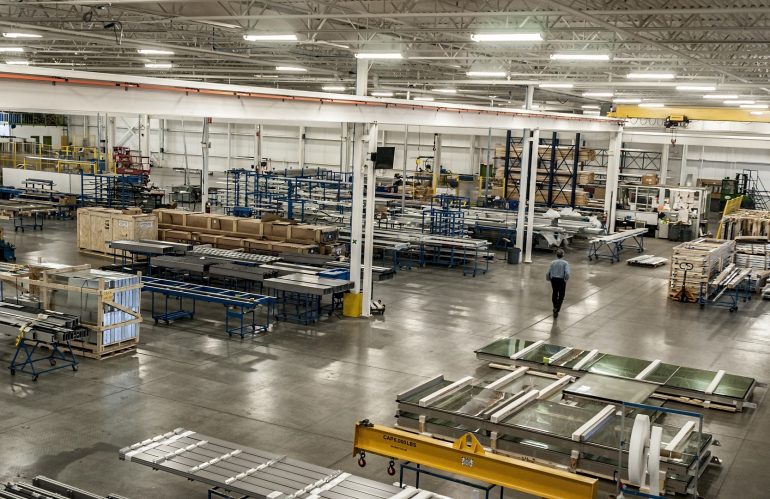
A plant has security requirements that a warehouse does not: process areas that are genuinely dangerous, intellectual property on the floor, contractor and visitor traffic that must be controlled for safety as much as for theft, and environments that destroy ordinary equipment. 360 Technology Group installs and services access control, cameras and alarms for manufacturing plants across North and South Carolina.
Safety-driven access control
In a plant, restricting a door is often a safety control rather than a security one — keeping untrained people out of a press area, a chemical store or an electrical room. That changes who owns the access policy: it is usually EHS, not facilities, and the credential should follow training records.
Contractor and visitor control
Contractors arriving for a shutdown, auditors, and customer visits all need time-limited credentials tied to an induction, and a record of exactly who was inside during a given shift. This is frequently the first thing an auditor asks to see.
Harsh environments
Wash-down areas, weld shops, dust, heat, vibration, paint booths and chemical vapor all destroy standard cameras and readers. Correct enclosure ratings, stainless housings and, where required, purged or rated equipment are specification items, not upgrades.
IP and process protection
Where the process itself is the asset, camera placement becomes sensitive: covering an access route rather than the machine, and controlling who inside the company can view which cameras. Role-based video permissions matter more here than in most facilities.
OT network separation
Plant networks are frequently segmented from IT and from the control network for good reason. Security systems must be placed deliberately — not bridged casually across a boundary someone spent real money establishing. We design to your segmentation, not around it.
Perimeter, gates and truck traffic
Raw material in, finished goods out, employee parking and a scale house all need vehicle control and plate capture, plus gate operators sized for the traffic and the duty cycle.
Downtime is the real constraint
On a plant the cost of stopping a line dwarfs the cost of the security project. That means installation is scheduled around planned shutdowns, weekend windows and changeovers; anything that requires a line stop is identified in the survey and scheduled explicitly rather than discovered mid-install. We work to plant permit systems for hot work, elevated work and lockout/tagout, and we expect to sit in the pre-work safety briefing like any other trade.
Common questions
Can access control follow our training and certification records?
With several platforms, yes — access levels can be driven from an identity or HR source so an expired certification removes access to the area it covers. The integration must be confirmed per platform.
Do you install in classified or wash-down areas?
We specify equipment rated for the environment and coordinate with your engineering team on any classified area. Where a location requires specialist rated equipment we will say so and price it properly rather than fitting standard hardware and hoping.
Can you work around a shutdown schedule?
Yes, and it is usually the right way to do it. We stage materials and pre-build what we can, then use the shutdown window for the work that genuinely needs the line stopped.
Talk to us about your facility
Tell us the process, the environments involved, whether access needs to follow training records and when your next shutdown window is. We will survey and phase around it.
Request a site survey Call 704-726-4254
Charlotte, NC headquarters · every city in North and South Carolina · 24/7 emergency service by on-call technicians.
Capabilities and selection checkpoints
The cards in this section summarize information to evaluate; they are not separate pages. Availability and compatibility can change, so final models and releases must be confirmed against current manufacturer resources.
Manufacturing Security Solutions and Installers
Treat this as a design checkpoint; the final selection depends on field conditions and supported releases.
Manufacturing Security Systems
Document who configures, tests, administers and supports this function after the project is accepted.
Security Cameras for Manufacturing Plants
Treat this as a design checkpoint; the final selection depends on field conditions and supported releases.
Access Control for Manufacturing Plants
Connect this capability to a named user workflow and a testable result at the actual facility.
Alarm System for Manufacturing Plants
Compare retained equipment, migration effort, subscription impact and replacement options for this topic.
Operational priority
Compare retained equipment, migration effort, subscription impact and replacement options for this topic.
Site variation
Confirm which current models, editions, licenses and dependencies support this requirement before procurement.
Shared infrastructure
Review compatibility, capacity, infrastructure and lifecycle implications with the complete system design.
Phasing
Connect this capability to a named user workflow and a testable result at the actual facility.
Governance
Document who configures, tests, administers and supports this function after the project is accepted.
Repeatable closeout
Document who configures, tests, administers and supports this function after the project is accepted.
Evidence to collect before design
A useful survey and stakeholder review should produce the following project evidence for Manufacturing:
- Business-critical workflows, operating hours, occupancy, public areas and after-hours use.
- Current network, cabling, video, access, alarm, audiovisual and software-system inventory.
- Guest, employee, contractor, device and operational traffic or permission boundaries.
- Multi-site standards, local exceptions, construction phasing and business-continuity constraints.
- Privacy, retention, safety, accessibility, cybersecurity and organizational policy requirements.
- Acceptance tests, training, documentation, monitoring and accountable lifecycle ownership.
Architecture and integration review
Operational priority
Rank the business processes and safety outcomes the project must protect.
Site variation
Separate portfolio standards from conditions that genuinely differ at each property.
Shared infrastructure
Coordinate cabling, network, identity, power and pathways across system disciplines.
Phasing
Plan work windows, temporary operation, cutover and communication around occupied facilities.
Governance
Assign access, evidence, accounts, updates, retention and change-control responsibilities.
Repeatable closeout
Use consistent testing, labels, drawings, training and support records across sites.
Compare proposals on the same evidence
Product names and device counts do not make competing proposals equivalent. Ask each bidder to identify assumptions, exclusions, supported versions, owner responsibilities and the proof that will be delivered at acceptance.
| Comparison area | Evidence a complete proposal should provide |
|---|---|
| Fit for the operating need | A written explanation of how Manufacturing supports the required users, events and workflows. |
| Compatibility | A supported-parts, software, license and integration matrix tied to the proposed architecture. |
| Infrastructure | Documented power, network, pathways, environmental and owner-furnished dependencies. |
| Acceptance | Named tests, expected results, exception handling and responsibility for correcting deficiencies. |
| Lifecycle | Current support status, update approach, warranty, subscriptions, spares and replacement planning. |
Deployment and acceptance sequence
- Discovery: agree on users, operating outcomes, retained systems, constraints and acceptance criteria.
- Field validation: verify dimensions, infrastructure, environmental conditions, pathways, power, network and integration points.
- Documented design: name the architecture, supported components, licenses, responsibilities, assumptions and change process.
- Staging and implementation: prepare configuration, backups, labels and test scripts before controlled field deployment.
- Operational acceptance: exercise normal use, exceptions, outages and recovery; then deliver training and system records.
Software, firmware and lifecycle responsibility
Record the installed model, hardware revision, software or firmware release, license or subscription, warranty and administrator ownership at handoff. Those details make later troubleshooting and upgrade planning materially safer.
Downloads, release notes, advisories and manuals should come from the manufacturer’s official portal. 360 Technology Group links to official resources and does not host firmware files locally. Some portals require an authorized customer, dealer or support entitlement.
Before any update, confirm the exact model and region, prerequisites, supported intermediate releases, backup, maintenance window, integration compatibility, rollback limits and post-update test plan. Cloud-managed products may control release timing differently from locally managed systems.
Build a project-specific comparison
Share the facility type, Carolina location, existing platform, approximate device count, operating problem, required integrations and target schedule. 360 Technology Group can use that context to determine whether Manufacturing deserves a detailed site and design review.