
Authorized dealer · Certified installers · Charlotte, NC headquarters
Authorized dealer and certified installers — North and South Carolina
360 Technology Group is an authorized dealer and certified installer for the manufacturers we represent, and has been installing warehouse and distribution-center security cameras, dock and door access control across North and South Carolina since 2018 — more than 8 years.
- Authorized dealer — genuine equipment, licensing and manufacturer support entitlement.
- Certified installers — factory-trained technicians handle the cabling, mounting, power, programming and commissioning.
- Repair, service and takeover — we maintain, repair, upgrade and take over existing systems.
- 24/7 emergency service — on-call service technicians for emergency repairs, plus scheduled preventive maintenance.
We cover every city in North Carolina and South Carolina from our Charlotte headquarters. Request a quote or service call Call 704-726-4254
Warehouse and distribution security — North & South Carolina
Warehouse security systems for Carolina distribution facilities
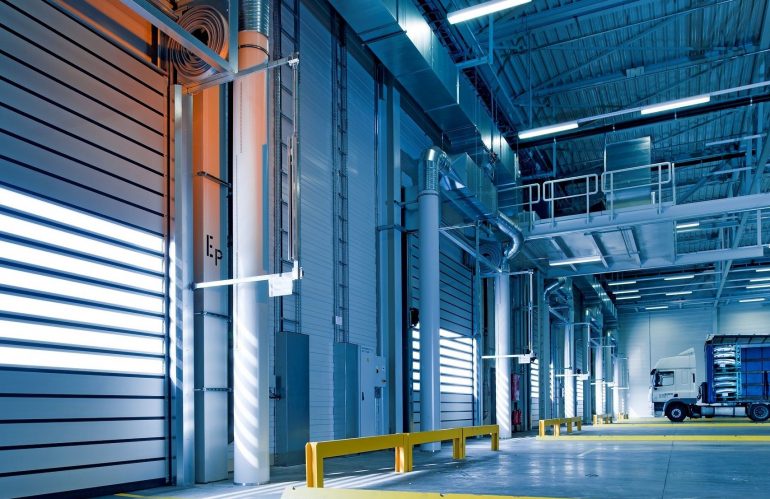
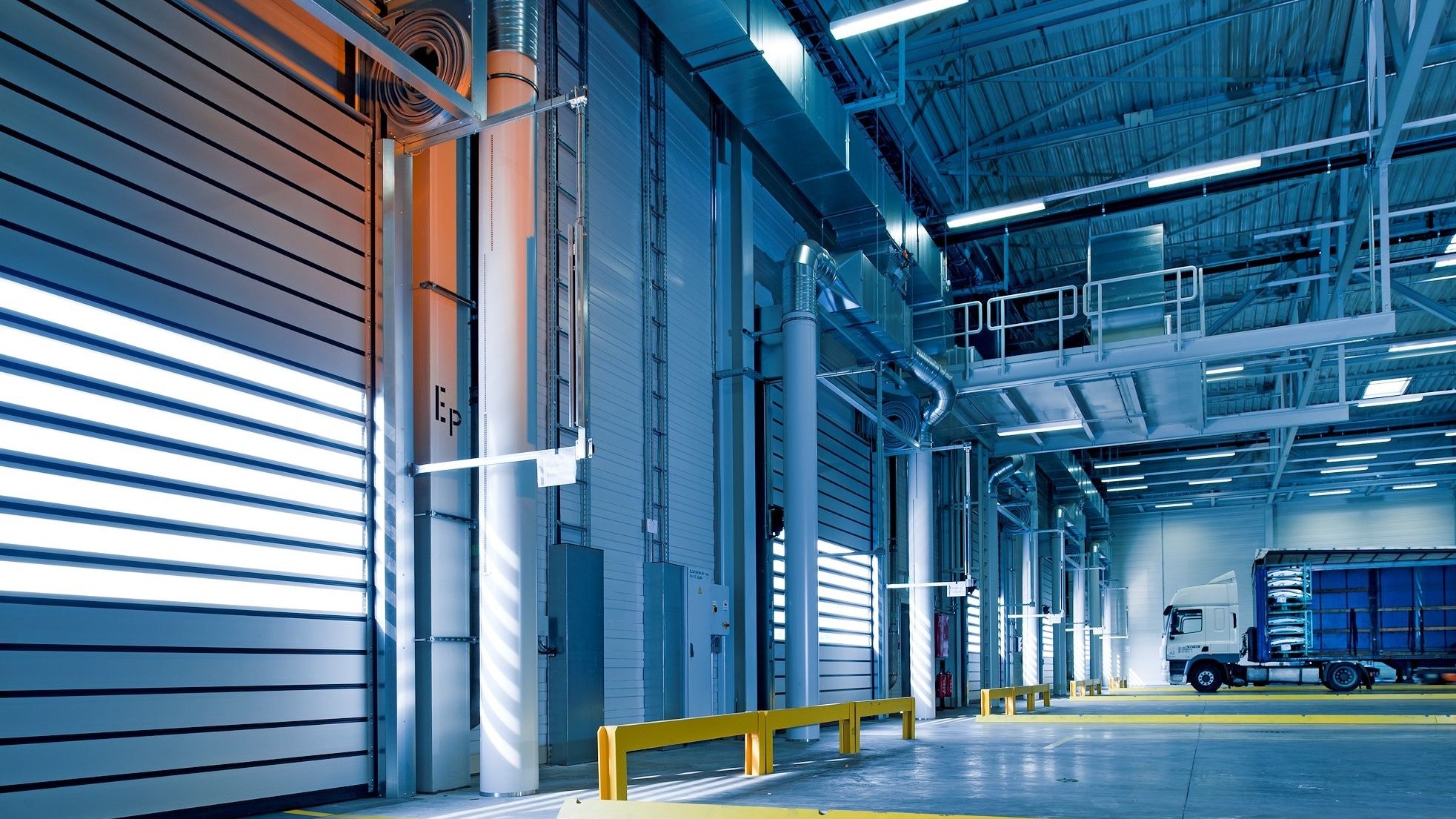
Warehouses are large, mostly empty volumes with a handful of extremely important boundaries: the dock doors, the yard gate, the high-value cage and the office door. 360 Technology Group installs and services camera systems, access control, gate operators and alarms for warehouses, distribution centers, 3PL facilities and cold storage across North and South Carolina, including the I-85 and I-77 corridors around Charlotte, Concord, Gastonia, Rock Hill and Fort Mill.
Dock doors and trailer activity
The dock is where inventory legitimately leaves and where it illegitimately leaves. Coverage per door position, camera angles that show the trailer interior and the load, door-position monitoring so an open dock door outside shift hours raises an alarm, and enough retention to reconcile against a shipping record days later.
Yard, gate and vehicle control
Gate operators with credentialed entry, plate capture at the gate, and coverage of the trailer yard. Knowing which tractor pulled which trailer at 2:40am is a different capability from having a camera “on the yard”, and it is the one that settles a claim.
High-value cage and segregation
Where high-value or controlled stock is caged, that door deserves its own credential, its own audit trail and its own camera. A single facility-wide access level defeats the purpose of the cage.
Scale and cable distance
A 300,000 square foot building means long runs, multiple IDF closets, fiber between them and careful PoE budgeting. This is where cheap bids fail: the cameras are quoted and the infrastructure to reach them is not. See structured cabling.
Racking, lighting and mounting
Racking moves, and cameras aimed down aisles get blocked within a season. Mounting height, aisle changes, high-bay lighting that cycles, and dust or condensation in cold storage all shape camera selection and placement more than resolution does.
Shift patterns and access schedules
Multi-shift operations need access levels that follow the shift, temporary credentials for agency labor with automatic expiry, and a clean record of who was in the building during the window when something went missing.
Working in an operating facility
Distribution facilities rarely stop. We work around shift changes and peak season, use lifts in aisles only during agreed windows, coordinate with safety on hot work and elevated work permits, and phase installations so no dock position is out of service during loading. On peak-season sites the practical answer is often to install infrastructure ahead of peak and commission after it — we will say so rather than promise a schedule that will not survive October.
Common questions
Can you cover the yard as well as the building?
Yes — yard cameras, gate operators, plate capture and perimeter detection are a normal part of warehouse scope. Exterior work brings trenching, pathway and surge protection into the quote, which is why we survey before pricing.
How many cameras does a warehouse need?
It is driven by dock positions, entrances, the yard, high-value areas and aisle count rather than by square footage. We work from a coverage objective per area, which usually produces fewer and better-placed cameras than a per-square-foot rule of thumb.
Can you integrate access control with our WMS or HR system?
Several platforms support identity or HR integration so a termination revokes building access automatically. We confirm the specific connector and version before it is quoted.
Talk to us about your facility
Send the facility size, dock count, whether there is a yard and gate, and what you need to be able to prove after an incident. We will survey and design to that.
Request a site survey Call 704-726-4254
Charlotte, NC headquarters · every city in North and South Carolina · 24/7 emergency service by on-call technicians.
Capabilities and selection checkpoints
The cards in this section summarize information to evaluate; they are not separate pages. Availability and compatibility can change, so final models and releases must be confirmed against current manufacturer resources.
Warehouse Security Systems Installers
Treat this as a design checkpoint; the final selection depends on field conditions and supported releases.
Warehouse Security Camera System
Compare retained equipment, migration effort, subscription impact and replacement options for this topic.
Warehouse Security Alarm Systems
Document who configures, tests, administers and supports this function after the project is accepted.
Warehouse Access Control Systems
Treat this as a design checkpoint; the final selection depends on field conditions and supported releases.
Warehouse Intercom Systems
Connect this capability to a named user workflow and a testable result at the actual facility.
Operational priority
Compare retained equipment, migration effort, subscription impact and replacement options for this topic.
Site variation
Compare retained equipment, migration effort, subscription impact and replacement options for this topic.
Shared infrastructure
Compare retained equipment, migration effort, subscription impact and replacement options for this topic.
Phasing
Document who configures, tests, administers and supports this function after the project is accepted.
Governance
Compare retained equipment, migration effort, subscription impact and replacement options for this topic.
Repeatable closeout
Treat this as a design checkpoint; the final selection depends on field conditions and supported releases.
Evidence to collect before design
A useful survey and stakeholder review should produce the following project evidence for Warehouse:
- Business-critical workflows, operating hours, occupancy, public areas and after-hours use.
- Current network, cabling, video, access, alarm, audiovisual and software-system inventory.
- Guest, employee, contractor, device and operational traffic or permission boundaries.
- Multi-site standards, local exceptions, construction phasing and business-continuity constraints.
- Privacy, retention, safety, accessibility, cybersecurity and organizational policy requirements.
- Acceptance tests, training, documentation, monitoring and accountable lifecycle ownership.
Architecture and integration review
Operational priority
Rank the business processes and safety outcomes the project must protect.
Site variation
Separate portfolio standards from conditions that genuinely differ at each property.
Shared infrastructure
Coordinate cabling, network, identity, power and pathways across system disciplines.
Phasing
Plan work windows, temporary operation, cutover and communication around occupied facilities.
Governance
Assign access, evidence, accounts, updates, retention and change-control responsibilities.
Repeatable closeout
Use consistent testing, labels, drawings, training and support records across sites.
Compare proposals on the same evidence
Product names and device counts do not make competing proposals equivalent. Ask each bidder to identify assumptions, exclusions, supported versions, owner responsibilities and the proof that will be delivered at acceptance.
| Comparison area | Evidence a complete proposal should provide |
|---|---|
| Fit for the operating need | A written explanation of how Warehouse supports the required users, events and workflows. |
| Compatibility | A supported-parts, software, license and integration matrix tied to the proposed architecture. |
| Infrastructure | Documented power, network, pathways, environmental and owner-furnished dependencies. |
| Acceptance | Named tests, expected results, exception handling and responsibility for correcting deficiencies. |
| Lifecycle | Current support status, update approach, warranty, subscriptions, spares and replacement planning. |
Deployment and acceptance sequence
- Discovery: agree on users, operating outcomes, retained systems, constraints and acceptance criteria.
- Field validation: verify dimensions, infrastructure, environmental conditions, pathways, power, network and integration points.
- Documented design: name the architecture, supported components, licenses, responsibilities, assumptions and change process.
- Staging and implementation: prepare configuration, backups, labels and test scripts before controlled field deployment.
- Operational acceptance: exercise normal use, exceptions, outages and recovery; then deliver training and system records.
Software, firmware and lifecycle responsibility
Record the installed model, hardware revision, software or firmware release, license or subscription, warranty and administrator ownership at handoff. Those details make later troubleshooting and upgrade planning materially safer.
Downloads, release notes, advisories and manuals should come from the manufacturer’s official portal. 360 Technology Group links to official resources and does not host firmware files locally. Some portals require an authorized customer, dealer or support entitlement.
Before any update, confirm the exact model and region, prerequisites, supported intermediate releases, backup, maintenance window, integration compatibility, rollback limits and post-update test plan. Cloud-managed products may control release timing differently from locally managed systems.
Build a project-specific comparison
Share the facility type, Carolina location, existing platform, approximate device count, operating problem, required integrations and target schedule. 360 Technology Group can use that context to determine whether Warehouse deserves a detailed site and design review.