
Authorized dealer · Certified installers · Charlotte, NC headquarters
360 Technology Group is an authorized Milestone dealer and certified installer
We have been selling, installing, programming and servicing Milestone systems across North and South Carolina since 2018 — more than 8 years. Our scope covers Milestone XProtect VMS editions, recording servers, Husky IVO appliances, Smart Client, mobile and web clients.
- Authorized Milestone dealer — we quote and supply genuine Milestone equipment, licensing and subscriptions.
- Certified Milestone installers — our technicians install, wire, program, commission and document the system.
- Repair and takeover — we service, troubleshoot, expand and take over existing Milestone installations we did not originally install.
- 24/7 emergency service — on-call service technicians for emergency repairs, plus scheduled preventive maintenance.
We cover every city in North Carolina and South Carolina from our Charlotte headquarters. Request a quote or service call Call 704-726-4254
Milestone equipment we supply and install
Milestone XProtect is the open VMS: it records almost any ONVIF camera from almost any manufacturer, which makes it the right platform for sites with mixed or inherited hardware, and for owners who refuse to be locked to one camera brand. We design, install, license and support XProtect systems across North and South Carolina.
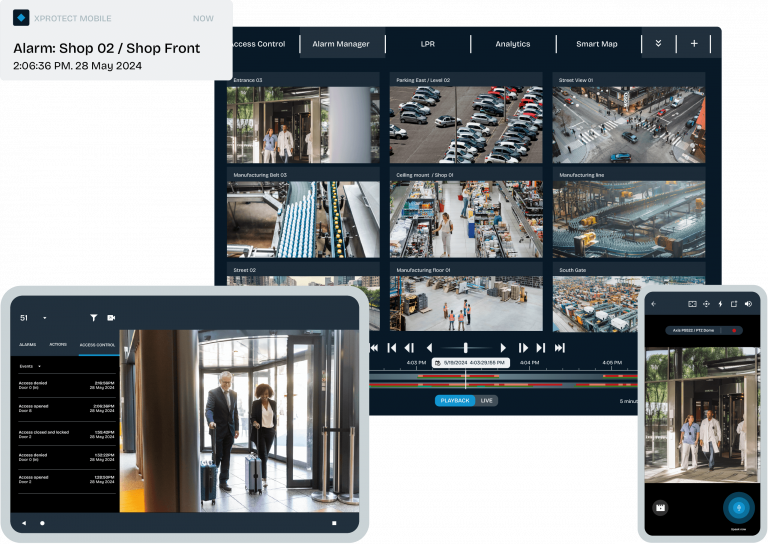
XProtect VMS
The software itself, in editions from single-site to enterprise. Edition choice controls camera count, failover, federation and analytics — get it wrong and you either overpay or hit a wall in year two.
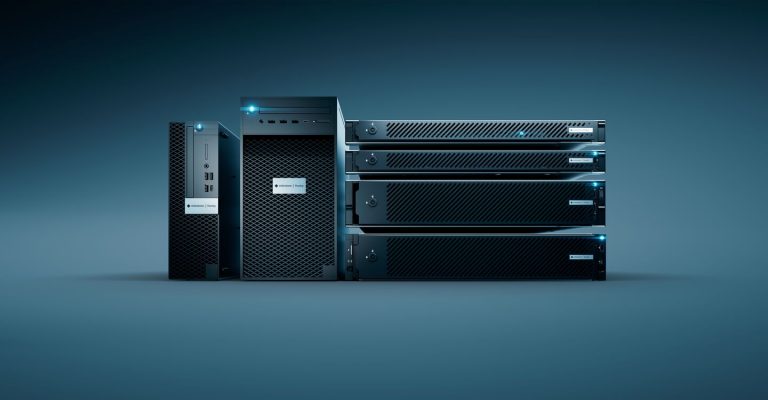
Husky IVO series
Milestone's own recording appliances, pre-built and pre-licensed for XProtect. Removes the "who supports the server" argument between us, your IT team and the software vendor.
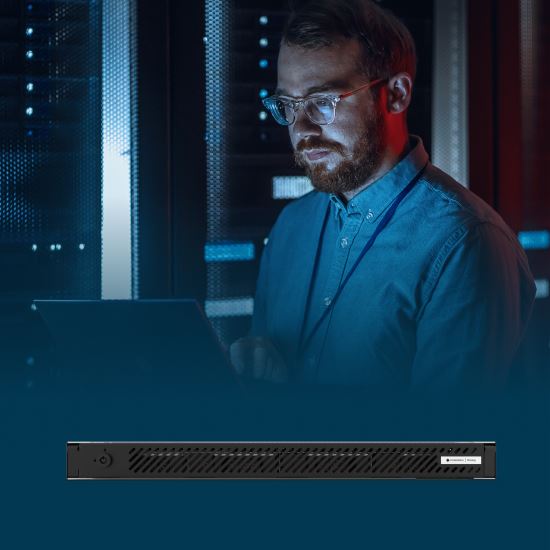
Husky IVO 350R
Rack-mount recorder for small to mid-size camera counts. Sized from retention, resolution and frame rate rather than from camera count alone.
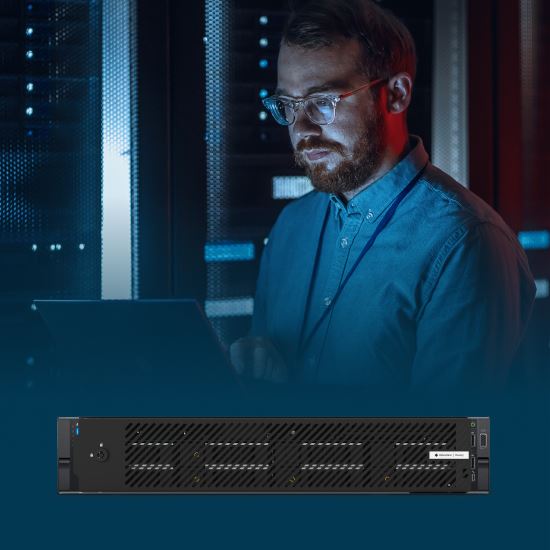
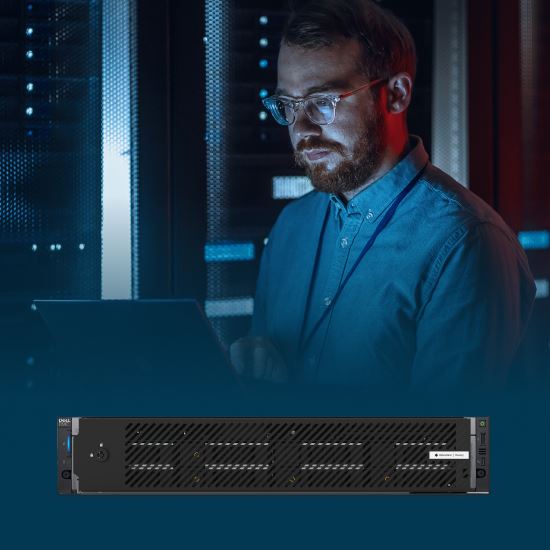
Because XProtect is open, we regularly use it to rescue sites where a proprietary recorder has gone end-of-life but the cameras are still perfectly good — keep the cameras, replace the head-end. See XProtect editions and clients and recording servers and Husky IVO.
Product images are supplied by the manufacturer. 360 Technology Group is an authorized Milestone dealer and certified installer. Models, finishes and availability change — the proposal names the exact part numbers for your project.
North Carolina and South Carolina planning guide
Milestone
Use this Milestone guide to move the discussion beyond a feature list. Compatibility, infrastructure, administration, failure behavior, testing and lifecycle ownership should be settled before equipment or subscriptions are ordered.
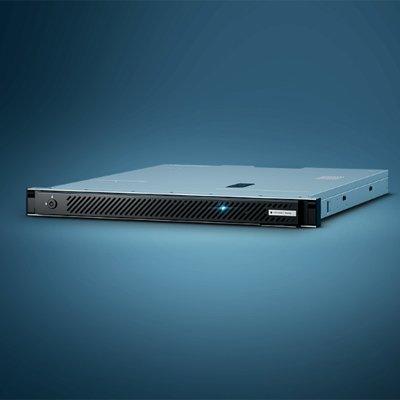
Start with the decision, not the catalog
360 Technology Group evaluates Milestone as part of a complete video-surveillance and evidence-management system. The recommendation should follow a field-verified problem statement, not a presumption that every published feature belongs in the project.
Discovery documents the current equipment, affected users, desired workflows, required integrations, security and privacy expectations, project constraints and measurable acceptance criteria. That evidence creates a fair basis for comparing reuse, migration and replacement.
For Carolina facilities, the scope should also account for occupied work areas, weather exposure, lightning and surge conditions, local construction coordination, network readiness, service access and the owner’s long-term administration model.
Detailed product and planning guides
Each card below opens a published guide with deeper product-family, design or implementation information.
Milestone Recording Servers, Husky IVO and Integrations
Open the detailed product, design or implementation guide.
Milestone XProtect VMS Editions and Clients
Open the detailed product, design or implementation guide.
Capabilities and selection checkpoints
The cards in this section summarize information to evaluate; they are not separate pages. Availability and compatibility can change, so final models and releases must be confirmed against current manufacturer resources.
Milestone Software Solutions and Installation
Document who configures, tests, administers and supports this function after the project is accepted.
Milestone Software Solutions
Compare retained equipment, migration effort, subscription impact and replacement options for this topic.
Milestone Expertise
Compare retained equipment, migration effort, subscription impact and replacement options for this topic.
Milestone XProtect Smart Client
Confirm which current models, editions, licenses and dependencies support this requirement before procurement.
Milestone XProtect Professional
Treat this as a design checkpoint; the final selection depends on field conditions and supported releases.
Milestone XProtect Corporate
Review compatibility, capacity, infrastructure and lifecycle implications with the complete system design.
Authorized Milestone Dealers
Connect this capability to a named user workflow and a testable result at the actual facility.
Who Should Use Milestone Systems
Compare retained equipment, migration effort, subscription impact and replacement options for this topic.
How to Implement Milestone VMS
Document who configures, tests, administers and supports this function after the project is accepted.
Buying and Installing Milestone VMS
Connect this capability to a named user workflow and a testable result at the actual facility.
Milestone Systems Partners
Confirm which current models, editions, licenses and dependencies support this requirement before procurement.
Milestone vs Avigilon
Document who configures, tests, administers and supports this function after the project is accepted.
Evidence to collect before design
A useful survey and stakeholder review should produce the following project evidence for Milestone:
- Scene objectives for every camera, including identification detail, direction of travel and operating hours.
- Day, night, backlight, glare, weather, vibration, privacy and mounting conditions at each location.
- Retention period, recording mode, resolution, frame rate, failover and export requirements.
- PoE load, switching, uplinks, bandwidth, storage, remote access and network-security constraints.
- VMS, analytics, access control, alarm, intercom and third-party integration expectations.
- User permissions, evidence handling, health monitoring, software support and replacement planning.
Architecture and integration review
Image objective
Specify the event and visual detail the camera must capture instead of selecting resolution in isolation.
Recording architecture
Calculate storage, retention, failover and export needs for the complete camera count.
Network design
Validate PoE, bandwidth, segmentation, time services, remote access and monitoring with IT.
Analytics use
Connect each analytic to a response workflow and test it under representative site conditions.
Privacy and evidence
Document viewing rights, exports, retention, audit history and applicable organizational policy.
Lifecycle support
Track model status, firmware, VMS compatibility, licenses, warranties and replacement options.
Compare proposals on the same evidence
Product names and device counts do not make competing proposals equivalent. Ask each bidder to identify assumptions, exclusions, supported versions, owner responsibilities and the proof that will be delivered at acceptance.
| Comparison area | Evidence a complete proposal should provide |
|---|---|
| Fit for the operating need | A written explanation of how Milestone supports the required users, events and workflows. |
| Compatibility | A supported-parts, software, license and integration matrix tied to the proposed architecture. |
| Infrastructure | Documented power, network, pathways, environmental and owner-furnished dependencies. |
| Acceptance | Named tests, expected results, exception handling and responsibility for correcting deficiencies. |
| Lifecycle | Current support status, update approach, warranty, subscriptions, spares and replacement planning. |
Deployment and acceptance sequence
- Discovery: agree on users, operating outcomes, retained systems, constraints and acceptance criteria.
- Field validation: verify dimensions, infrastructure, environmental conditions, pathways, power, network and integration points.
- Documented design: name the architecture, supported components, licenses, responsibilities, assumptions and change process.
- Staging and implementation: prepare configuration, backups, labels and test scripts before controlled field deployment.
- Operational acceptance: exercise normal use, exceptions, outages and recovery; then deliver training and system records.
Software, firmware and lifecycle responsibility
Record the installed model, hardware revision, software or firmware release, license or subscription, warranty and administrator ownership at handoff. Those details make later troubleshooting and upgrade planning materially safer.
Downloads, release notes, advisories and manuals should come from the manufacturer’s official portal. 360 Technology Group links to official resources and does not host firmware files locally. Some portals require an authorized customer, dealer or support entitlement.
Before any update, confirm the exact model and region, prerequisites, supported intermediate releases, backup, maintenance window, integration compatibility, rollback limits and post-update test plan. Cloud-managed products may control release timing differently from locally managed systems.
Select the current XProtect edition from required operations
Milestone’s current XProtect family includes Express+, Professional+, Expert and Corporate. Essential+ was discontinued as part of the XProtect 2025 R2 release, so an older proposal or inherited license should be checked against Milestone’s current comparison tool before an expansion is designed. Camera count alone does not choose the edition: maps, evidence control, failover, rule complexity, video walls, multi-site operation and third-party integrations can change the correct tier.
Express+
Evaluate for smaller deployments where the required device count, client workflow, reporting and integration set fit the current published limits.
Professional+
Consider when a growing site needs a broader operational feature set, bookmarks and integration support without the full enterprise architecture.
Expert and Corporate
Compare for advanced maps, distributed systems, resilience, evidence governance, complex rules and security-center workflows. Corporate adds capabilities that should be justified by an explicit operational requirement.
Engineer recording, clients and integrations as one system
Prepare a camera-by-camera recording schedule with resolution, frame rate, codec, scene activity, retention and archive policy. Size storage from those inputs and reserve headroom for camera additions, analytics metadata, exports and degraded-array conditions. Recording servers, management components, Smart Clients, Mobile or Web access, directory integration and time synchronization should be named in the architecture.
Milestone publishes device packs several times per year and maintains broad ONVIF support. That does not guarantee every feature of every camera. Verify the exact camera firmware, driver, audio, input/output, metadata, edge-storage and analytic-event behavior in a lab or representative pilot. MIP integrations should be version-matched and assigned an owner for licensing, updates and incident support.
Review Milestone’s official XProtect comparison before final licensing.
Map the complete XProtect service architecture
An XProtect deployment can include a Management Server, Recording Servers, Event Server, Log Server, Mobile Server, Smart Clients, Web and Mobile clients, directory services, integrations and SQL components. Small systems may place several roles together; larger or higher-availability systems separate them. The design should show each role, host, network zone, service account, certificate, database, backup and recovery dependency.
Management services
Document configuration ownership, database protection, directory integration and the process for restoring management services without losing the current camera and rule configuration.
Recording services
Allocate cameras and storage to recording servers from measured bitrates and client demand. Include failover behavior where the selected edition and risk model require it.
Operator clients
Specify workstation displays, decoding load, hardware acceleration, maps, views, alarm queues and export responsibilities for each operator role.
Storage design needs more than a retention estimate
For every camera, record the normal and event stream, codec, resolution, frame rate, target bitrate, expected motion, audio, metadata and retention. Separate live database storage from archive tiers and document volume format, RAID or appliance behavior, usable capacity, write load and the time required to rebuild or restore. Include simultaneous playback, export and investigation demand—not only recording throughput.
Retention should be tested from actual recorded data after commissioning. Scene complexity can make two cameras with identical settings produce very different storage consumption. The owner should approve the retention exceptions for high-value views, license-plate lanes, interview rooms, public areas and low-priority overview cameras.
Cybersecurity and identity baseline
- Use named administrator and operator accounts with least-privilege roles and directory integration where appropriate.
- Protect service accounts, certificates, backups and recovery credentials in the owner’s approved system.
- Segment cameras and servers, restrict management access and disable unused camera services.
- Use a consistent authenticated time source so video, access and alarm events can be correlated.
- Record the approved XProtect release, device pack, camera firmware and integration versions.
Milestone updates XProtect and device packs on recurring schedules. Each update should be evaluated against the current release notes, supported operating systems, camera drivers, plugins and rollback limits. Production updates need a backup, maintenance window, representative-camera test and owner approval.
Milestone acceptance test
Prove live and recorded video, search, bookmarks, maps, alarms, rules, user permissions, exports, audio, edge retrieval, failover where supplied, remote clients and integration events. Restart representative cameras and servers, interrupt a recording path and verify that health alarms reach the responsible team. The closeout package should include licenses, system diagrams, server and camera inventory, storage calculations, configuration backup, recovery sequence and official support links.
Prepare an XProtect design worksheet
A comparable proposal should include the number of sites, cameras, recording servers, simultaneous operators, remote users, maps, alarm rules, integrations and required failover. It should also list camera additions expected during the storage-retention period. Without that worksheet, two quotations may use different assumptions while appearing to offer the same VMS.
Camera compatibility
Record the exact model, firmware and Milestone driver. Confirm main and secondary streams, audio, digital input/output, metadata, edge storage and camera-side analytics. A general ONVIF statement is not a feature-level acceptance test.
Rules and alarms
Write the event source, schedule, condition, action, notification, acknowledgement and reset for every important rule. Assign an operator response and test it from the initiating device through the Smart Client.
Remote and mobile use
Estimate concurrent streams, internet capacity and authentication requirements. Define which users may view live video, search recordings, receive alarms or export evidence away from the facility.
Operational documentation after commissioning
The final package should include a logical architecture, recording-server and storage allocation, camera schedule, client workstation profile, integration inventory, role matrix, certificate and service-account ownership, backup locations and tested recovery order. Add a health-monitoring matrix showing who responds to camera loss, recording failure, storage threshold, database problem, integration fault and certificate expiration. Schedule a periodic recovery exercise so backups, credentials, certificates and service dependencies are proven before an actual outage.
Evidence procedures should cover bookmarks, exports, digital signatures where supported, player requirements, case naming, approved destinations and retention after export. Privacy masks, audio and analytics should be documented by camera so future administrators understand why each control exists.
Build a project-specific comparison
Share the facility type, Carolina location, existing platform, approximate device count, operating problem, required integrations and target schedule. 360 Technology Group can use that context to determine whether Milestone deserves a detailed site and design review.
Milestone XProtect owner, administrator and buyer resources
Use these Milestone resources to connect software, editions, clients, licensing, servers and storage research with installation, commissioning, maintenance and support in North and South Carolina.
Official Milestone XProtect software, firmware and support
Use these manufacturer-owned portals for current downloads, release notes, manuals, advisories and technical resources. 360 Technology Group links to official sources and does not copy or host firmware files.
Update carefully: confirm the exact model, region, hardware revision, installed version, prerequisites, required intermediate releases, support entitlement, integrations, backup, maintenance window, rollback limitations and post-update tests. The wrong package or sequence can interrupt service or prevent a downgrade.
Some portals require a customer, dealer, certified-technician or active-support login. Cloud-managed products may update automatically and may not offer a public firmware file.