
Authorized dealer · Certified installers · Charlotte, NC headquarters
360 Technology Group is an authorized Hartmann Controls dealer and certified installer
We have been selling, installing, programming and servicing Hartmann Controls systems across North and South Carolina since 2018 — more than 8 years. Our scope covers Hartmann PoE and PRS door controllers, Odyssey and PROTECTOR.Net software, readers, mobile credentials, elevator and Aperio integration.
- Authorized Hartmann Controls dealer — we quote and supply genuine Hartmann Controls equipment, licensing and subscriptions.
- Certified Hartmann Controls installers — our technicians install, wire, program, commission and document the system.
- Repair and takeover — we service, troubleshoot, expand and take over existing Hartmann Controls installations we did not originally install.
- 24/7 emergency service — on-call service technicians for emergency repairs, plus scheduled preventive maintenance.
We cover every city in North Carolina and South Carolina from our Charlotte headquarters. Request a quote or service call Call 704-726-4254
Access-control engineering and lifecycle ownership
Hartmann Controls System Engineering
Basis-of-design, installation and lifecycle services for Odyssey, PROTECTOR.Net, PoE and PRS controllers, readers, elevators, Aperio and automation.
Define the control architecture before selecting part numbers
360 Technology Group treats Hartmann as an integrated control platform. The engineering process begins with an opening schedule and operating narratives: who is allowed through each door, how access changes by time or condition, what alarms are actionable, which systems exchange data and how the facility must behave during loss of network, server or utility power.
Those narratives are translated into controller topology, reader and credential technology, lock and power calculations, network zones, server or hosted deployment, integration boundaries and an acceptance matrix. The objective is a design that can be installed, tested and supported without relying on undocumented assumptions.
Engineering workstreams and product guides
Software and data architecture
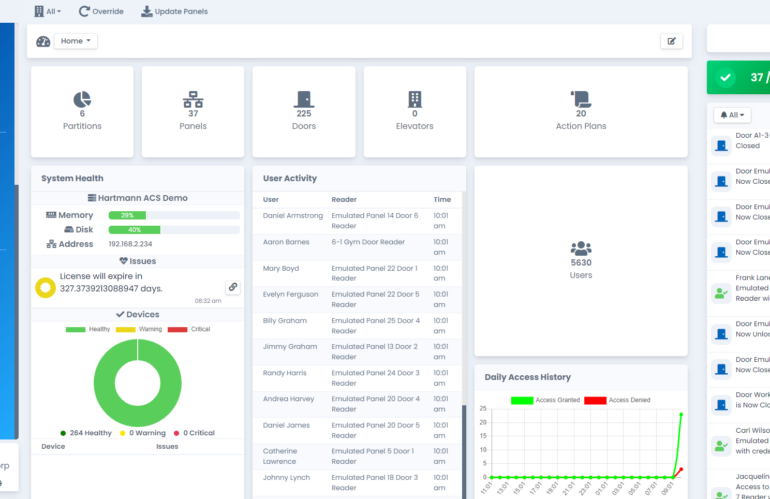
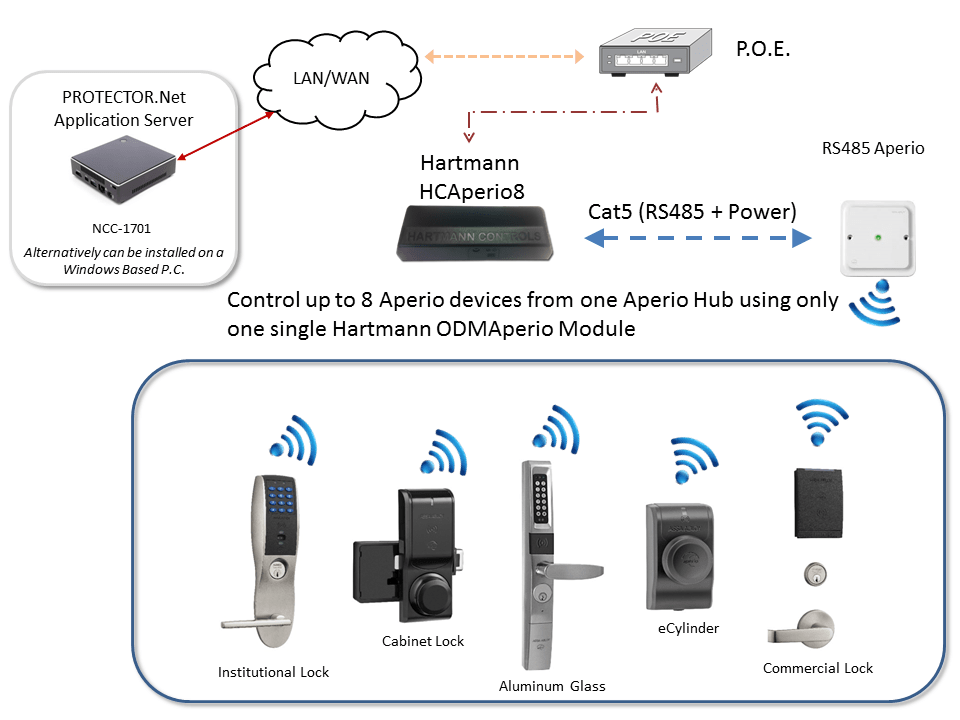
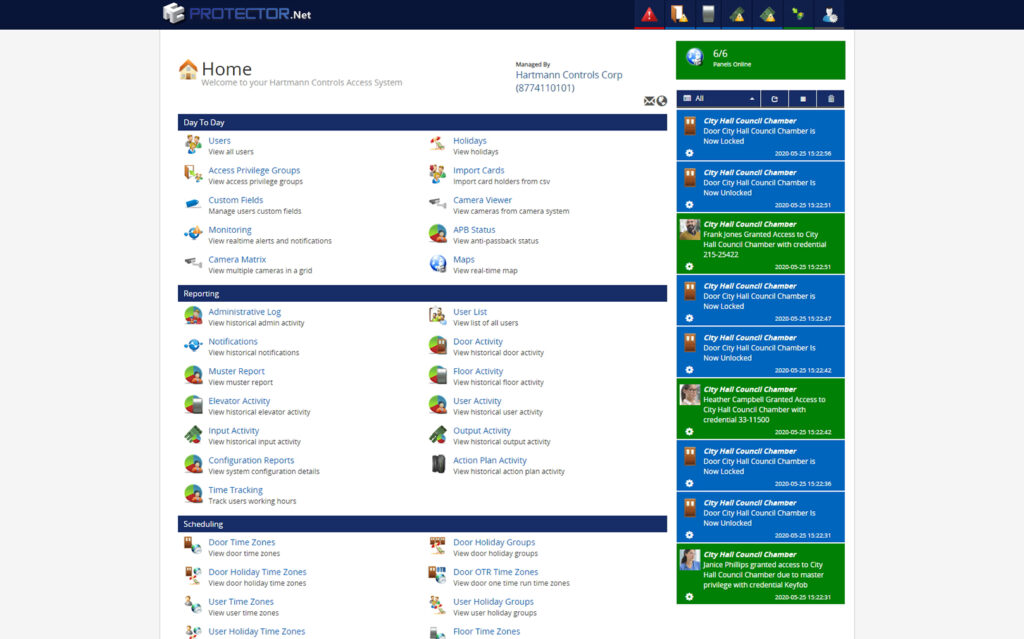
Odyssey and PROTECTOR.Net deployment, SQL, roles, partitions, maps, ACE logic, identity/video integration, backup and recovery.
Controller topology
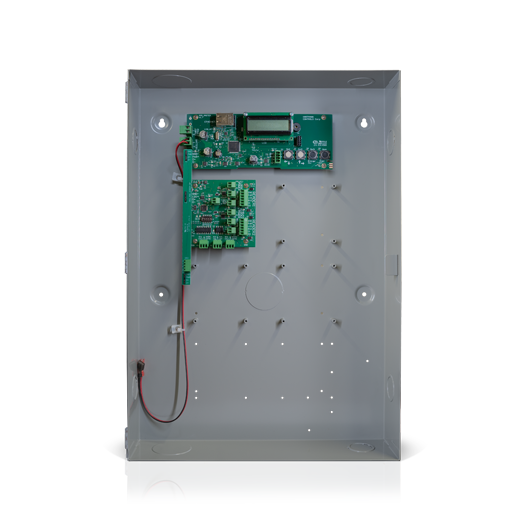
PoE one- and two-door designs, PRS panels, expansion buses, I/O, enclosure and power choices tied to the door schedule.
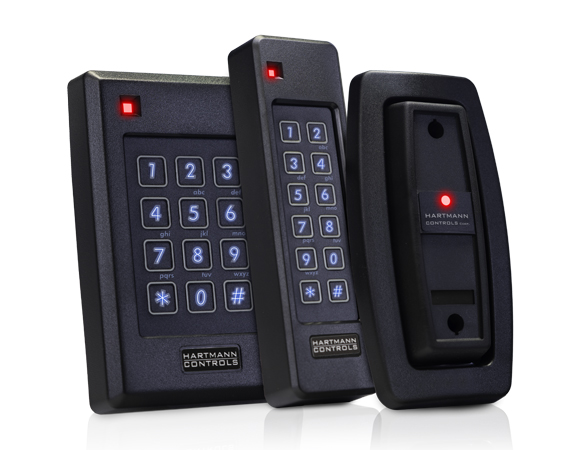
Identity at the opening
Reader protocol, card technology, Bluetooth/NFC mobile credentials, migration, issuance and revocation requirements.
Integrated control points
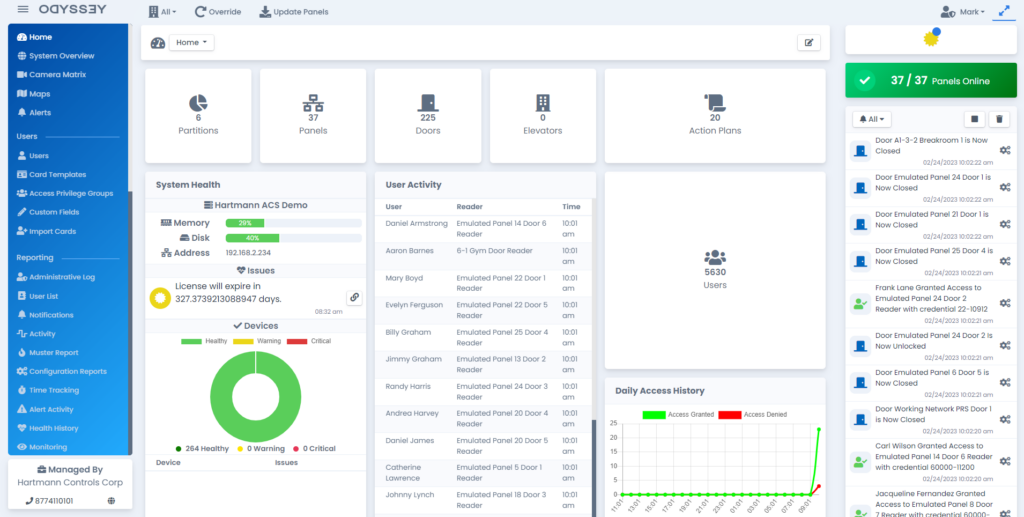
Aperio wireless openings, elevator-floor authorization, auxiliary I/O, intrusion/video relationships and deployment models.
Hartmann basis-of-design decisions
| Design layer | Required evidence | Acceptance outcome |
|---|---|---|
| Management platform | Door/device scale, operators, tenancy/partitioning, integration, hosting, SQL, audit and recovery requirements. | Supported Odyssey or PROTECTOR.Net release with named services, licenses, ownership and backup process. |
| Controller network | Existing cabling, PoE budget, lock power, RS-485 distances, environmental conditions and offline requirements. | Every controller communicates, retains approved local behavior and uploads buffered events after restoration. |
| Credential layer | Format, population, mobile-device policy, OSDP/Wiegand constraints and transition sequence. | Representative users pass grant, deny, schedule, revocation and outage test cases. |
| Integration layer | Interface owner, supported versions, data/event mapping, timing and failure notification. | Documented cause-and-effect tests for video, intrusion, elevators, Aperio, directory or auxiliary controls. |
Submittal-to-closeout sequence
Validate
Survey doors, pathways, panels, power, network, servers and integration endpoints.
Engineer
Issue topology, schedules, supported-component matrix, responsibilities and acceptance procedures.
Commission
Stage software and controllers, install field devices, program logic and execute controlled cutovers.
Sustain
Deliver as-builts, backups, training, support status, spares and a documented update strategy.
Software implementation is part of the construction scope
Our scope can include prerequisite validation, Windows and SQL coordination, application installation, controller enrollment, door and device naming, access levels, schedules, permissions, dashboards, maps, alarms, notifications, photo badging, ACE automations and supported integrations.
Commissioning also addresses database backup, service recovery, cybersecurity boundaries, administrator ownership and upgrade responsibility. A project is not accepted merely because cards unlock doors; the owner must be able to administer, diagnose and recover the platform.
360 Technology Group is a certified Hartmann Controls installer. Private certificate numbers and individual certificate-holder records are retained internally rather than displayed online.
Controlled manufacturer references
Develop a Hartmann basis of design
Provide the facility type, opening schedule, current equipment, integration list and administrative model. We can turn that evidence into a system architecture and implementation path.