
Authorized dealer · Certified installers · Charlotte, NC headquarters
Authorized dealer and certified installers — North and South Carolina
360 Technology Group is an authorized dealer and certified installer for the manufacturers we represent, and has been installing cannabis facility security cameras, compliance recording and access control across North and South Carolina since 2018 — more than 8 years.
- Authorized dealer — genuine equipment, licensing and manufacturer support entitlement.
- Certified installers — factory-trained technicians handle the cabling, mounting, power, programming and commissioning.
- Repair, service and takeover — we maintain, repair, upgrade and take over existing systems.
- 24/7 emergency service — on-call service technicians for emergency repairs, plus scheduled preventive maintenance.
We cover every city in North Carolina and South Carolina from our Charlotte headquarters. Request a quote or service call Call 704-726-4254
Cannabis facility security — North & South Carolina
Cannabis and hemp facility security systems
Cannabis and hemp operations are among the few facility types where the security system is a licensing condition rather than a business decision. Camera coverage, retention, access logging and alarm response are typically written into the regulation, and a system that is merely good is not the same as a system that is compliant. 360 Technology Group installs and services camera, access control and alarm systems for cultivation, processing, testing and retail operations in North and South Carolina.
Coverage written to the rule
Regulated operations usually specify which areas must be covered, at what resolution and frame rate, and with what field of view — entrances, grow rooms, processing, vaults, disposal and points of sale. We design against the written requirement you are licensed under and document the mapping camera by camera.
Retention and export
Retention periods are commonly far longer than commercial norms, and regulators expect footage to be produced on request in a usable format within a stated time. Storage must be sized to the real recording settings, not to a marketing figure, and export has to be tested.
Restricted-area access logging
Every entry to a limited-access area typically needs to be attributable to an individual and retained. That means credentials are personal, never shared, and the audit trail is treated as a compliance record rather than a convenience.
Vault, disposal and transport
The highest-risk points are the vault, the disposal process and the transfer to a vehicle. These need dedicated coverage, dual-credential access where required, and camera angles that show the material and the people simultaneously.
Grow-room environments
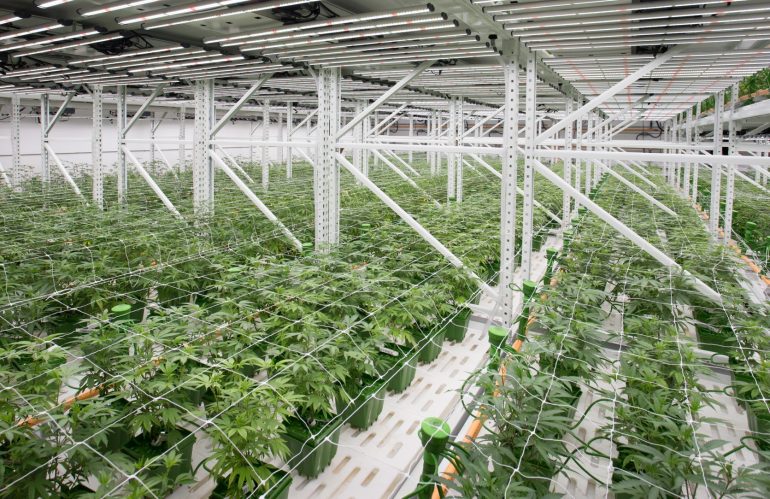
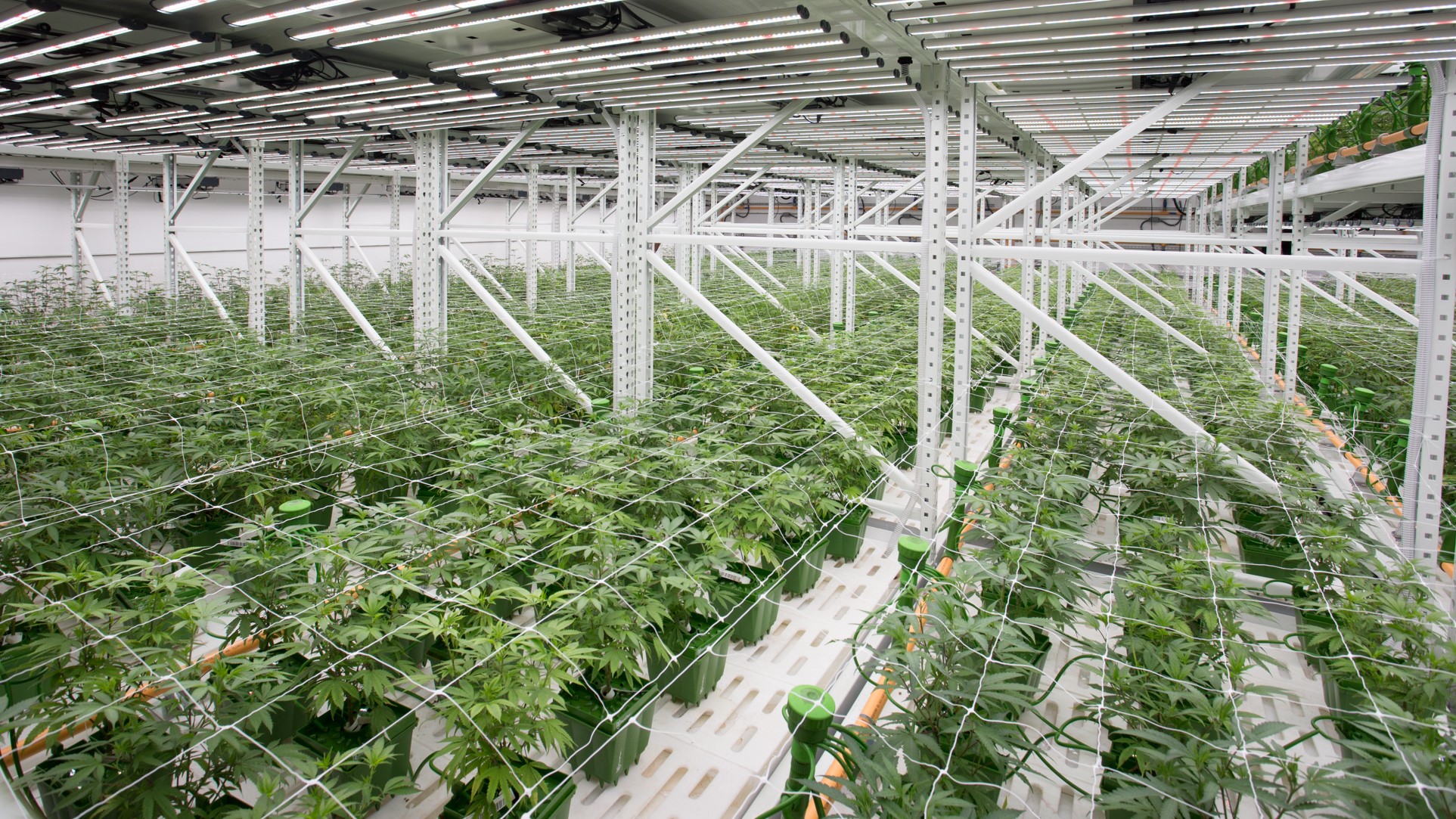
High humidity, intense and cycling lighting, and constant equipment noise defeat ordinary cameras. Sealed housings, appropriate lensing for the lighting spectrum and careful placement away from irrigation are specification items.
Power and outage behavior
Regulations frequently require the recording system to survive a power interruption. UPS sizing, generator coordination and documented failover behavior belong in the design and in the acceptance test.
Inspection-ready documentation
What regulators ask for, in practice, is paperwork: a camera location plan, a schedule showing coverage against each required area, retention calculations, an access-control user list, alarm response procedures and evidence that the system was tested. We produce that as part of the project rather than reconstructing it the week before an inspection. If you are preparing an application, we can provide the security plan documentation the application requires.
Common questions
Can you help with the security plan for a license application?
Yes. We regularly produce camera location plans, coverage schedules and retention calculations for applications, and we design so the built system matches what was submitted.
What happens if the regulation changes?
Retention and coverage requirements do change. Systems should be specified with storage headroom and camera capacity to absorb a moderate change without a rebuild, and we will flag where your design is close to a limit.
Do you service systems installed by someone else?
Yes, including takeovers of systems that were installed to a previous version of the rules and now need bringing up to the current requirement.
Talk to us about your facility
Tell us the license type, the areas involved and the retention you are required to hold. We will survey and design against the written requirement, with documentation you can hand an inspector.
Request a site survey Call 704-726-4254
Charlotte, NC headquarters · every city in North and South Carolina · 24/7 emergency service by on-call technicians.
Capabilities and selection checkpoints
The cards in this section summarize information to evaluate; they are not separate pages. Availability and compatibility can change, so final models and releases must be confirmed against current manufacturer resources.
Cannabis Security Systems Installers
Treat this as a design checkpoint; the final selection depends on field conditions and supported releases.
Cannabis Security Systems
Connect this capability to a named user workflow and a testable result at the actual facility.
Operational priority
Confirm which current models, editions, licenses and dependencies support this requirement before procurement.
Site variation
Confirm which current models, editions, licenses and dependencies support this requirement before procurement.
Shared infrastructure
Connect this capability to a named user workflow and a testable result at the actual facility.
Phasing
Treat this as a design checkpoint; the final selection depends on field conditions and supported releases.
Governance
Compare retained equipment, migration effort, subscription impact and replacement options for this topic.
Repeatable closeout
Document who configures, tests, administers and supports this function after the project is accepted.
Evidence to collect before design
A useful survey and stakeholder review should produce the following project evidence for Cannabis:
- Business-critical workflows, operating hours, occupancy, public areas and after-hours use.
- Current network, cabling, video, access, alarm, audiovisual and software-system inventory.
- Guest, employee, contractor, device and operational traffic or permission boundaries.
- Multi-site standards, local exceptions, construction phasing and business-continuity constraints.
- Privacy, retention, safety, accessibility, cybersecurity and organizational policy requirements.
- Acceptance tests, training, documentation, monitoring and accountable lifecycle ownership.
Architecture and integration review
Operational priority
Rank the business processes and safety outcomes the project must protect.
Site variation
Separate portfolio standards from conditions that genuinely differ at each property.
Shared infrastructure
Coordinate cabling, network, identity, power and pathways across system disciplines.
Phasing
Plan work windows, temporary operation, cutover and communication around occupied facilities.
Governance
Assign access, evidence, accounts, updates, retention and change-control responsibilities.
Repeatable closeout
Use consistent testing, labels, drawings, training and support records across sites.
Compare proposals on the same evidence
Product names and device counts do not make competing proposals equivalent. Ask each bidder to identify assumptions, exclusions, supported versions, owner responsibilities and the proof that will be delivered at acceptance.
| Comparison area | Evidence a complete proposal should provide |
|---|---|
| Fit for the operating need | A written explanation of how Cannabis supports the required users, events and workflows. |
| Compatibility | A supported-parts, software, license and integration matrix tied to the proposed architecture. |
| Infrastructure | Documented power, network, pathways, environmental and owner-furnished dependencies. |
| Acceptance | Named tests, expected results, exception handling and responsibility for correcting deficiencies. |
| Lifecycle | Current support status, update approach, warranty, subscriptions, spares and replacement planning. |
Deployment and acceptance sequence
- Discovery: agree on users, operating outcomes, retained systems, constraints and acceptance criteria.
- Field validation: verify dimensions, infrastructure, environmental conditions, pathways, power, network and integration points.
- Documented design: name the architecture, supported components, licenses, responsibilities, assumptions and change process.
- Staging and implementation: prepare configuration, backups, labels and test scripts before controlled field deployment.
- Operational acceptance: exercise normal use, exceptions, outages and recovery; then deliver training and system records.
Software, firmware and lifecycle responsibility
Record the installed model, hardware revision, software or firmware release, license or subscription, warranty and administrator ownership at handoff. Those details make later troubleshooting and upgrade planning materially safer.
Downloads, release notes, advisories and manuals should come from the manufacturer’s official portal. 360 Technology Group links to official resources and does not host firmware files locally. Some portals require an authorized customer, dealer or support entitlement.
Before any update, confirm the exact model and region, prerequisites, supported intermediate releases, backup, maintenance window, integration compatibility, rollback limits and post-update test plan. Cloud-managed products may control release timing differently from locally managed systems.
Build a project-specific comparison
Share the facility type, Carolina location, existing platform, approximate device count, operating problem, required integrations and target schedule. 360 Technology Group can use that context to determine whether Cannabis deserves a detailed site and design review.