
Authorized dealer · Certified installers · Charlotte, NC headquarters
Authorized dealer and certified installers — North and South Carolina
360 Technology Group is an authorized dealer and certified installer for the manufacturers we represent, and has been installing multifamily and property-management access control, video intercom and camera systems across North and South Carolina since 2018 — more than 8 years.
- Authorized dealer — genuine equipment, licensing and manufacturer support entitlement.
- Certified installers — factory-trained technicians handle the cabling, mounting, power, programming and commissioning.
- Repair, service and takeover — we maintain, repair, upgrade and take over existing systems.
- 24/7 emergency service — on-call service technicians for emergency repairs, plus scheduled preventive maintenance.
We cover every city in North Carolina and South Carolina from our Charlotte headquarters. Request a quote or service call Call 704-726-4254
Multifamily and property management — North & South Carolina
Apartment and property management access control in the Carolinas
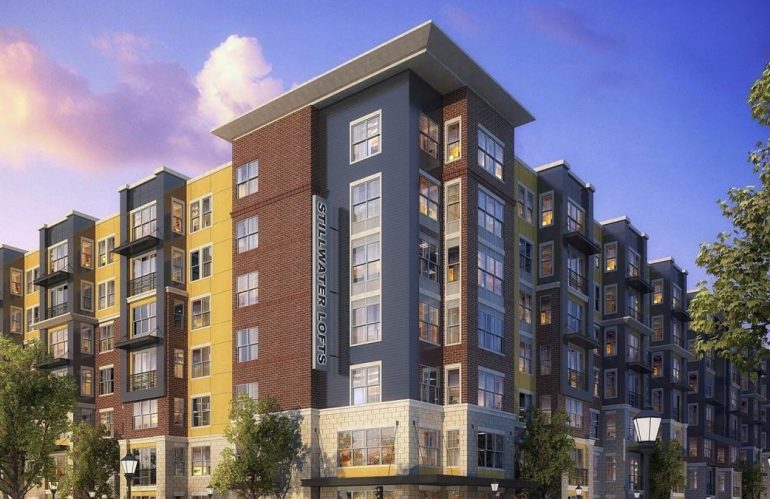
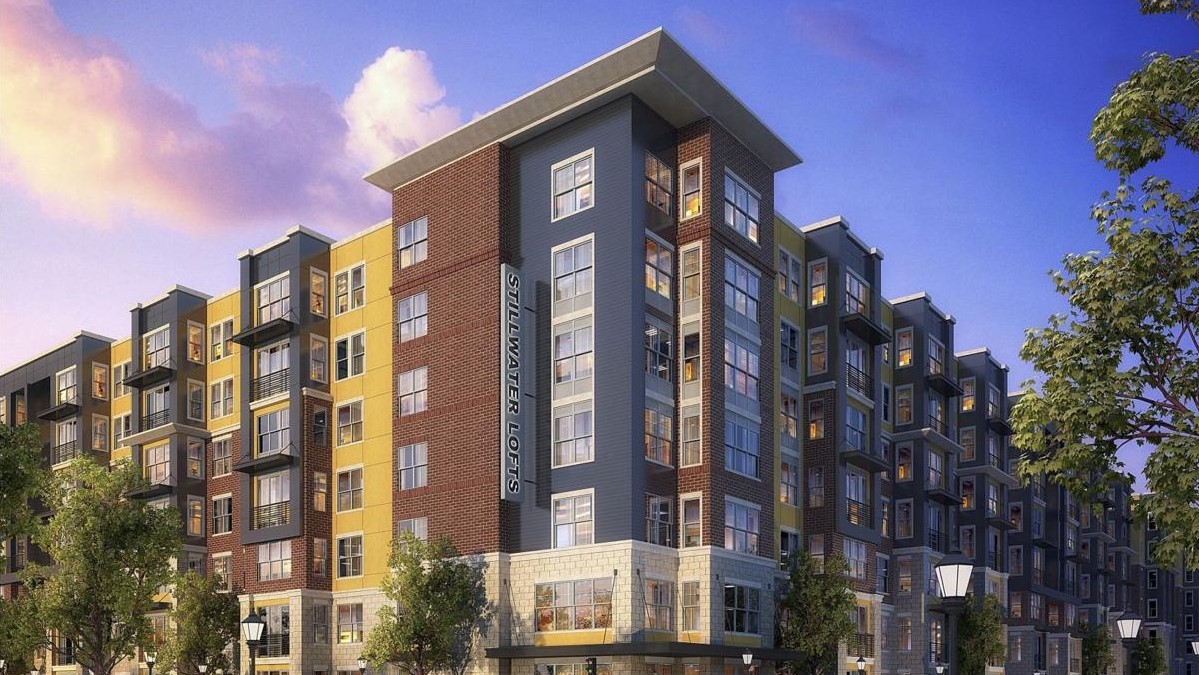
Multifamily security is a resident-experience problem as much as a security one. If entry is inconvenient, residents prop the door, and the whole system is defeated by a rock. 360 Technology Group installs and services video intercom, access control, cameras, package room and gate systems for apartment communities, condominiums, student housing and mixed-use buildings across North and South Carolina.
Video intercom and resident entry
Residents let in guests from their phones; couriers and contractors get controlled, logged entry. Directory maintenance as residents move in and out is the part that decides whether the system still works in year three, so it has to be trivially easy for the on-site team.
Package rooms and deliveries
Package theft is the most frequent complaint in most communities. A controlled package room with credentialed carrier access and a camera on the door removes almost all of it, and it is a leasing feature as much as a security measure.
Turnover without re-keying
Mobile and card credentials revoked at move-out end the perpetual re-keying cost and the unreturned-key problem. For amenity doors and common areas this is usually where the system pays for itself.
Amenities and hours
Pool, gym, clubhouse, business center and dog park doors on schedules, with after-hours access logged. Liability questions about amenity access almost always come down to whether the door was actually secured at the posted time.
Gates and vehicle access
Vehicle gates take real abuse in multifamily. Operator selection, loop and safety device design, resident credentials and a call box that reaches a phone rather than a dead landline determine whether the gate is working or permanently propped open.
Parking and common-area cameras
Lot coverage with plate capture at entrances, plus corridors, mail areas, laundry and amenity spaces. Cameras never cover unit interiors, and retention and footage-release policy should be written into the community rules.
Who administers it after handover
On-site staff turn over frequently, and a system only a departed manager understood becomes a system nobody maintains. We design multifamily deployments so routine tasks — adding a resident, revoking a credential, opening a gate remotely, pulling a clip — take a few clicks and can be taught to a new leasing agent in an afternoon. Regional managers get portfolio-level access across communities where the platform supports it. We provide written procedures, not just a login.
Related: intercom and entry systems, access control, camera installation.
Common questions
Can residents use their phones instead of fobs?
Yes, on most current platforms, usually alongside cards or fobs for residents who prefer them or for guests and contractors. Supporting both is normal and worth doing.
Can you take over a system installed by the developer?
Frequently yes. Developer-installed systems are often abandoned by whoever installed them once the building is turned over. We assess what is there, document it and support it going forward.
Do you handle gate operator repair?
Yes — gate operators are one of our most common service calls. We repair and maintain most commercial operators and are an authorized dealer for DoorKing, LiftMaster, Viking and FAAC.
Talk to us about your facility
Send the community, unit count, whether there are gates and a package room, and what residents complain about. We will survey and propose something the on-site team can actually run.
Request a site survey Call 704-726-4254
Charlotte, NC headquarters · every city in North and South Carolina · 24/7 emergency service by on-call technicians.
Capabilities and selection checkpoints
The cards in this section summarize information to evaluate; they are not separate pages. Availability and compatibility can change, so final models and releases must be confirmed against current manufacturer resources.
Property Management Security Installers
Connect this capability to a named user workflow and a testable result at the actual facility.
Security System Audit
Document who configures, tests, administers and supports this function after the project is accepted.
Security Camera Systems for Apartment Buildings and Offices
Connect this capability to a named user workflow and a testable result at the actual facility.
Intercom Systems for Apartment Buildings and Offices
Connect this capability to a named user workflow and a testable result at the actual facility.
Operational priority
Treat this as a design checkpoint; the final selection depends on field conditions and supported releases.
Site variation
Confirm which current models, editions, licenses and dependencies support this requirement before procurement.
Shared infrastructure
Connect this capability to a named user workflow and a testable result at the actual facility.
Phasing
Document who configures, tests, administers and supports this function after the project is accepted.
Governance
Treat this as a design checkpoint; the final selection depends on field conditions and supported releases.
Repeatable closeout
Review compatibility, capacity, infrastructure and lifecycle implications with the complete system design.
Evidence to collect before design
A useful survey and stakeholder review should produce the following project evidence for Property Management:
- Business-critical workflows, operating hours, occupancy, public areas and after-hours use.
- Current network, cabling, video, access, alarm, audiovisual and software-system inventory.
- Guest, employee, contractor, device and operational traffic or permission boundaries.
- Multi-site standards, local exceptions, construction phasing and business-continuity constraints.
- Privacy, retention, safety, accessibility, cybersecurity and organizational policy requirements.
- Acceptance tests, training, documentation, monitoring and accountable lifecycle ownership.
Architecture and integration review
Operational priority
Rank the business processes and safety outcomes the project must protect.
Site variation
Separate portfolio standards from conditions that genuinely differ at each property.
Shared infrastructure
Coordinate cabling, network, identity, power and pathways across system disciplines.
Phasing
Plan work windows, temporary operation, cutover and communication around occupied facilities.
Governance
Assign access, evidence, accounts, updates, retention and change-control responsibilities.
Repeatable closeout
Use consistent testing, labels, drawings, training and support records across sites.
Compare proposals on the same evidence
Product names and device counts do not make competing proposals equivalent. Ask each bidder to identify assumptions, exclusions, supported versions, owner responsibilities and the proof that will be delivered at acceptance.
| Comparison area | Evidence a complete proposal should provide |
|---|---|
| Fit for the operating need | A written explanation of how Property Management supports the required users, events and workflows. |
| Compatibility | A supported-parts, software, license and integration matrix tied to the proposed architecture. |
| Infrastructure | Documented power, network, pathways, environmental and owner-furnished dependencies. |
| Acceptance | Named tests, expected results, exception handling and responsibility for correcting deficiencies. |
| Lifecycle | Current support status, update approach, warranty, subscriptions, spares and replacement planning. |
Deployment and acceptance sequence
- Discovery: agree on users, operating outcomes, retained systems, constraints and acceptance criteria.
- Field validation: verify dimensions, infrastructure, environmental conditions, pathways, power, network and integration points.
- Documented design: name the architecture, supported components, licenses, responsibilities, assumptions and change process.
- Staging and implementation: prepare configuration, backups, labels and test scripts before controlled field deployment.
- Operational acceptance: exercise normal use, exceptions, outages and recovery; then deliver training and system records.
Software, firmware and lifecycle responsibility
Record the installed model, hardware revision, software or firmware release, license or subscription, warranty and administrator ownership at handoff. Those details make later troubleshooting and upgrade planning materially safer.
Downloads, release notes, advisories and manuals should come from the manufacturer’s official portal. 360 Technology Group links to official resources and does not host firmware files locally. Some portals require an authorized customer, dealer or support entitlement.
Before any update, confirm the exact model and region, prerequisites, supported intermediate releases, backup, maintenance window, integration compatibility, rollback limits and post-update test plan. Cloud-managed products may control release timing differently from locally managed systems.
Build a project-specific comparison
Share the facility type, Carolina location, existing platform, approximate device count, operating problem, required integrations and target schedule. 360 Technology Group can use that context to determine whether Property Management deserves a detailed site and design review.